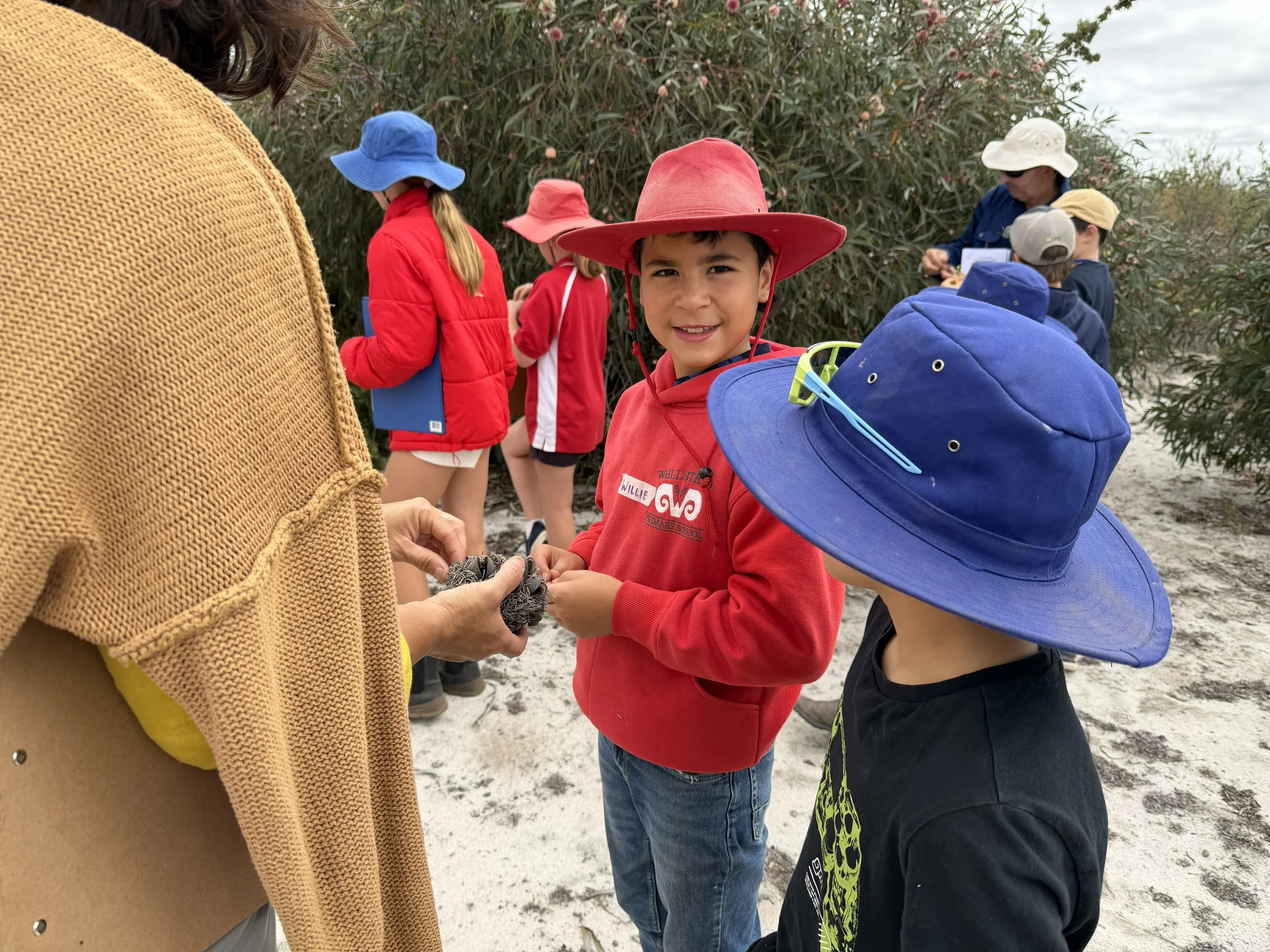
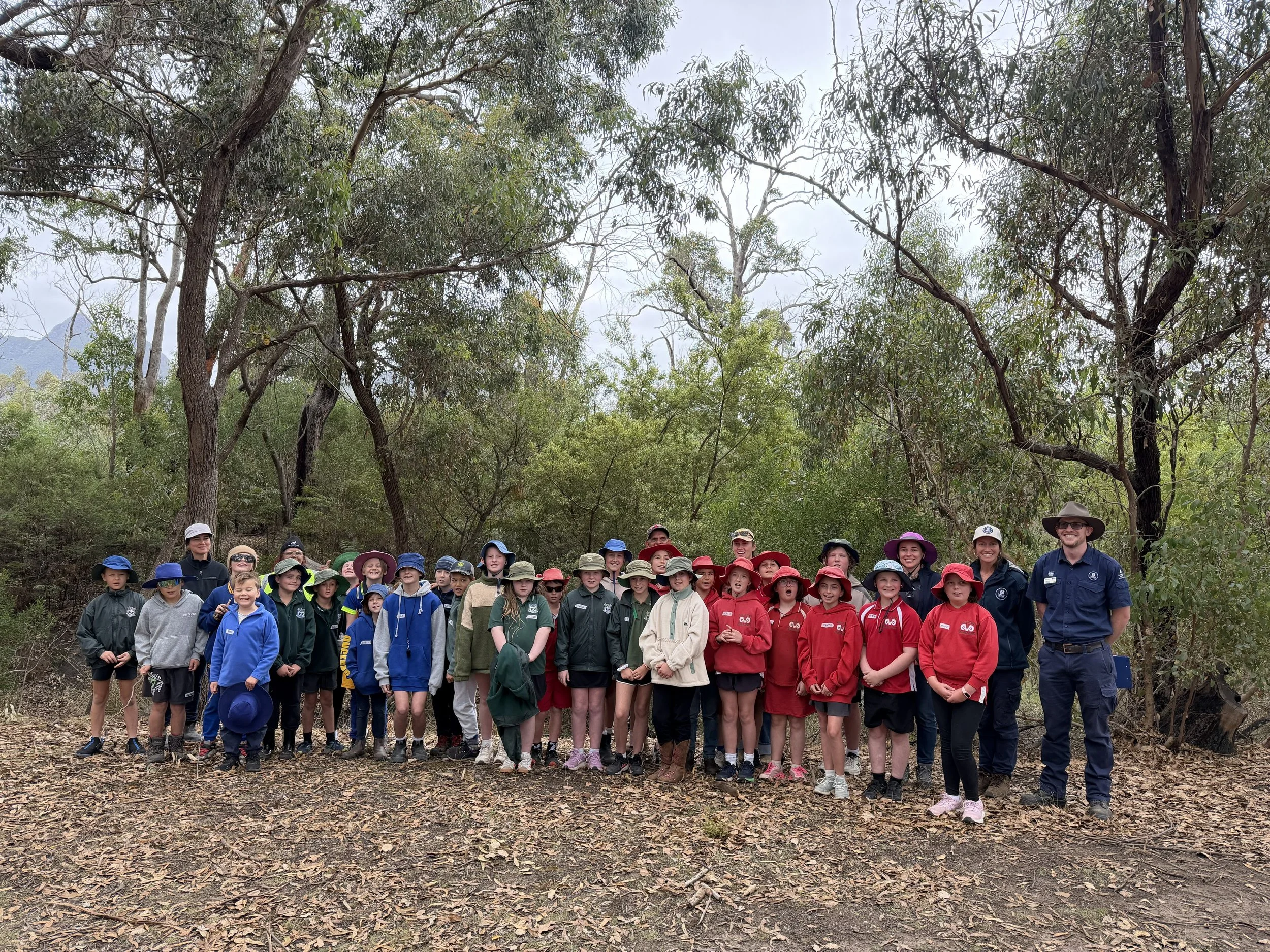
In late March, the NSPNR crew had the privilege of facilitating an overnight school camp with four of our local schools, Borden, Ongerup, Wellstead and South Stirling Primary school. We had 38 senior room students come together for two days of fun and immersive on country learning. With knowledge shared from numerous local specialists in the Environmental field. These included the Ngowanjerindji Rangers, Department of Biodiversity, Conservation and Attraction (DBCA), Mt Trio environment guru, John Byrne as well as Jeff Pinder from Bush Heritage’s Red Moort Field Station.
Day one begun with two information sessions down at the newly restored Moingup Springs campground. We heard from DBCA’s local Stirling Rangers National Park rangers, Dan, Ewan and Megan. These guys showcase the some of the beautiful flora and fauna species you can find with our local park, including the Banksia Montana and how it relies on fire to germinate. Students stating “The bank, as well as the ways DBCA care for the park. Our next session was from some of the wonderful Ngowanjerindji Rangers, Barb, Tassie and Twigg. These guys shared knowledge that dates back thousands of years, including creation stories and youth stories of their own. They showcased different species of bushtucker to the kids, and talked about the different uses, including medicinal. Borden Student Lillian O’Meehan states “I learnt that aboriginals ate Turtles, which I thought was disgusting! I also learned about the lolly tree and how aboriginals ate the sap of it as lollies, even thought it is completely flavourless. I found that cool, how different the lollies in the bush are to the lollies we have now.”
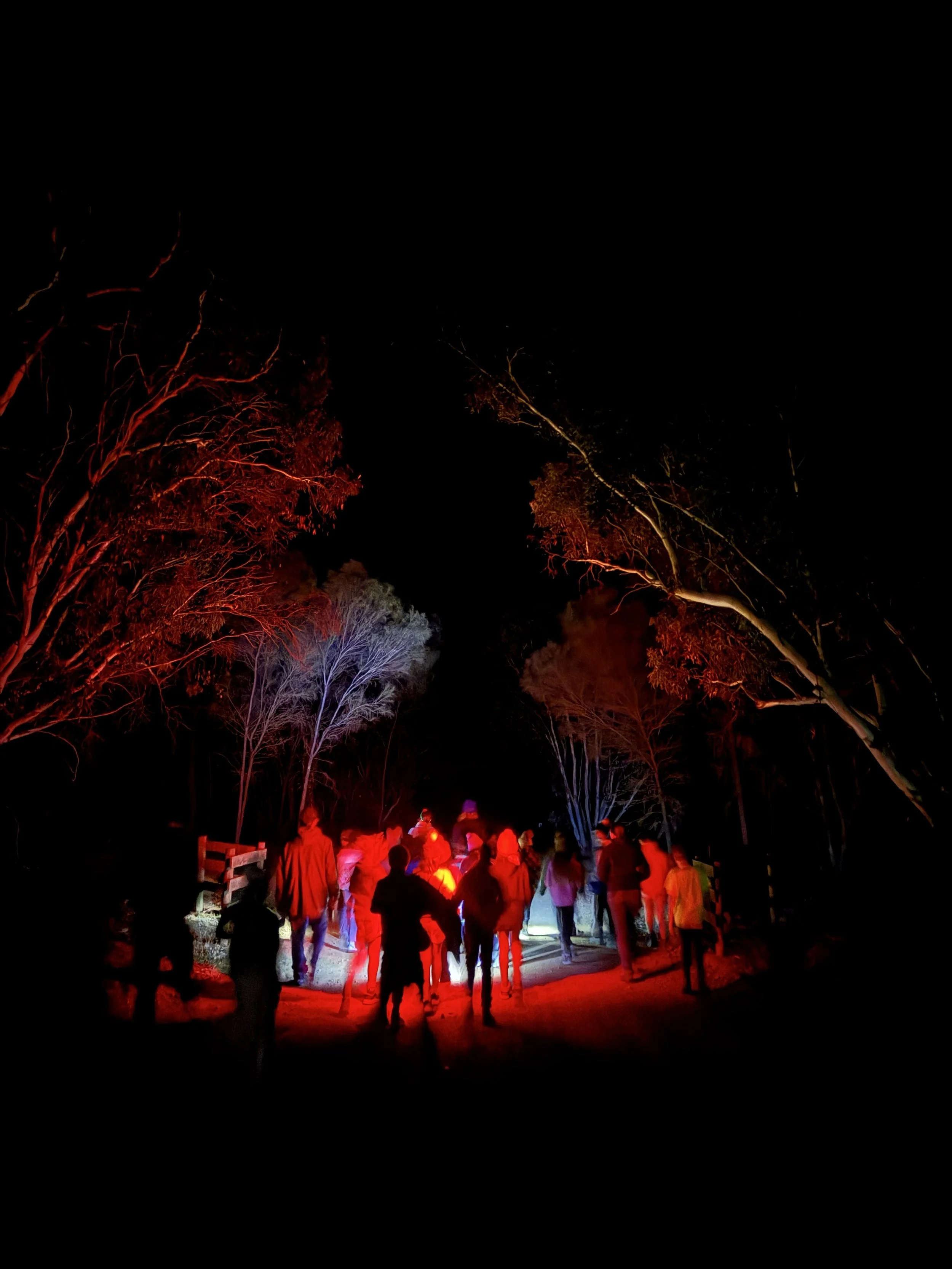
We continued the day with an insightful bushwalk from Mt Trio owner, John Bryne. This walk showcased to the kids everything you can find in the bush on such a short walk. It let their creativity run wild and it allowed them to get excited over even the little things, such as rabbit barrows! This creativity and excitement flowed into dinner, and even our spotlighting after dinner, where we saw a few nocturnal creatures, including the Lesser Long-eared Bat, as well as some very interesting, formatted caterpillars. These seemed to be a favourite for the kids, with multiple mentioning they were excited to tell Mum & Dad that they saw bats.
Day two brough on more regional knowledge as we moved across to Bush Heritage’s field station in Boxwood Hills. Andy Moir states “I enjoyed learning about the Red Moort National Park (Revegetation site) as it was originally old farm land, but over the course of 15 years it was transformed into a thriving national park (Revegetation Site) with 72 different types of plants native to the Stirlings. I had a great time there also getting to see many animals also native to our area, like the giant malleefoul mound with live babies inside. Fun fact, do you know it takes up to 9 months to make a malleefoul mound, and inside it is kept to 33 degrees all year around! They also leave their babies the moment that they are born, leaving them to survive for themselves.”
We finished day two by the Beaufort Inlet, where we were able to identify to the kids where the Pallinup River meets the sea. Over the course of last year through our Bilya Classroom within our Classroom to Paddock State NRM project, Borden and Ongerup primary School have been able to explore the Pallinup Catchment and understand the importance of looking after this waterway. This visit to the Beaufort Inlet really helped the kids see how the care of the waterways impacts the ocean and biodiversity downstream.
As you can hear these two days allowed the kids to learn on country and explore our special part of the Great Southern. Thank you to everyone who made this possible, it brings such joy to us, to be able to work with the little people of our community and share our passion for the environment.